Few things are more frustrating than turning the key or pressing the start button and getting nothing. Sometimes you hear clicking, sometimes the engine cranks but never fires, and sometimes everything goes completely quiet. Many drivers immediately assume the battery is bad, but the real cause can be somewhere else in the starting or fuel system.
The way the car behaves when it refuses to start gives important clues about where to look first.
What Happens When You Try to Start the Car
When you start the car, several systems have to work together in a very short time. The battery provides power, cables carry that power to the starter, and the starter motor spins the engine. At the same time, the engine computer needs good voltage so it can run the fuel pump, fire the ignition system, and control injectors.
If any part of that chain is weak, the engine may crank slowly, crank and never fire, or not crank at all. That is why listening carefully to what happens when you turn the key helps a lot. A healthy battery and starter will give you a strong, steady cranking sound, not just a click or a brief stumble.
Common “Car Won’t Start” Symptoms and What They Suggest
Different “won’t start” behaviors often point toward different systems. Paying attention to the exact symptom keeps you from guessing in the dark. Some of the more common patterns include:
- No sound at all, no dash lights, completely dead: often a power or connection issue at the battery or main cables
- Single loud click when you turn the key, but no cranking: often points toward a starter or starter relay problem
- Rapid, repeating clicking and dimming lights: usually a very weak battery or poor connection at the terminals
- Strong cranking that sounds normal, but engine never fires: often related to fuel delivery, ignition, or a sensor issue
- Starts sometimes, other times only clicks or does nothing: can indicate an intermittent starter, failing ignition switch, or loose connection
None of these is a perfect diagnosis, but they are helpful starting points when you describe the problem to a technician.
Signs You Might Really Need a New Battery
Batteries usually give some warning before they quit. Slow cranking, especially first thing in the morning, is one of the clearest signs. The starter may sound like it is dragging, and the interior lights or the dashboard may dim noticeably while you crank. If the battery is more than three to five years old and has lived through hot summers, it is more likely to be at the end of its life.
Needing jump-starts more than once or twice in a short period is another red flag. If the car starts immediately after a jump and runs well, but struggles again the next morning, the battery may no longer hold a charge. A proper load test at a shop is the most reliable way to confirm this, but those everyday symptoms are often the first hint that replacement is coming.
When the Problem Is the Starter, Cables, or Alternator
Not every time the car refuses to start with a good battery means something complicated in the engine. Starters wear out internally over time. The solenoid that engages the gear can stick, or the motor itself can develop “dead spots” that only show up in certain positions. You might hear one solid click with no cranking, or the engine may start fine one time and do nothing the next.
Battery cables and grounds matter just as much. Corroded terminals or loose clamps can limit how much power actually reaches the starter. From the driver’s seat, it feels a lot like a dead battery. The alternator is responsible for recharging the battery once the engine is running. If it is weak, the car can start fine after a long drive, then refuse to crank after a few short trips because the battery never recovered.
Owner Habits That Make Starting Problems More Likely
The way the car is used can quietly strain the starting and charging system. Lots of short trips with heavy electrical loads, such as headlights, blower fan, and rear defroster, give the alternator very little time to put charge back into the battery. Leaving accessories on with the engine off, or letting the car sit for long periods without being driven, can drain even a healthy battery.
Ignoring early symptoms is another common issue. If cranking has been getting slower for weeks or the battery warning light has flashed a few times, it is better to have things checked before you are completely stuck. We see many situations where the car has been “trying to tell” the driver something for a while.
Simple Checks You Can Do Before Calling for Help
You can safely gather a bit of information without any tools. Helpful checks include:
- Look at the battery terminals for heavy white or green crust, broken clamps, or obviously loose connections
- Turn the headlights on and see if they are bright and steady, or very dim, before you try to start the car
- Try starting the car in Neutral instead of Park in case the safety switch for the shifter is acting up
- Listen for the fuel pump priming sound for a second or two when you first turn the key to the “on” position
- Note whether the engine cranks the same way every time or changes from attempt to attempt
These details can guide a technician toward the right tests and may help you decide whether a jump start is reasonable or a tow is the safer option.
When a Starting Problem Needs Professional Diagnosis
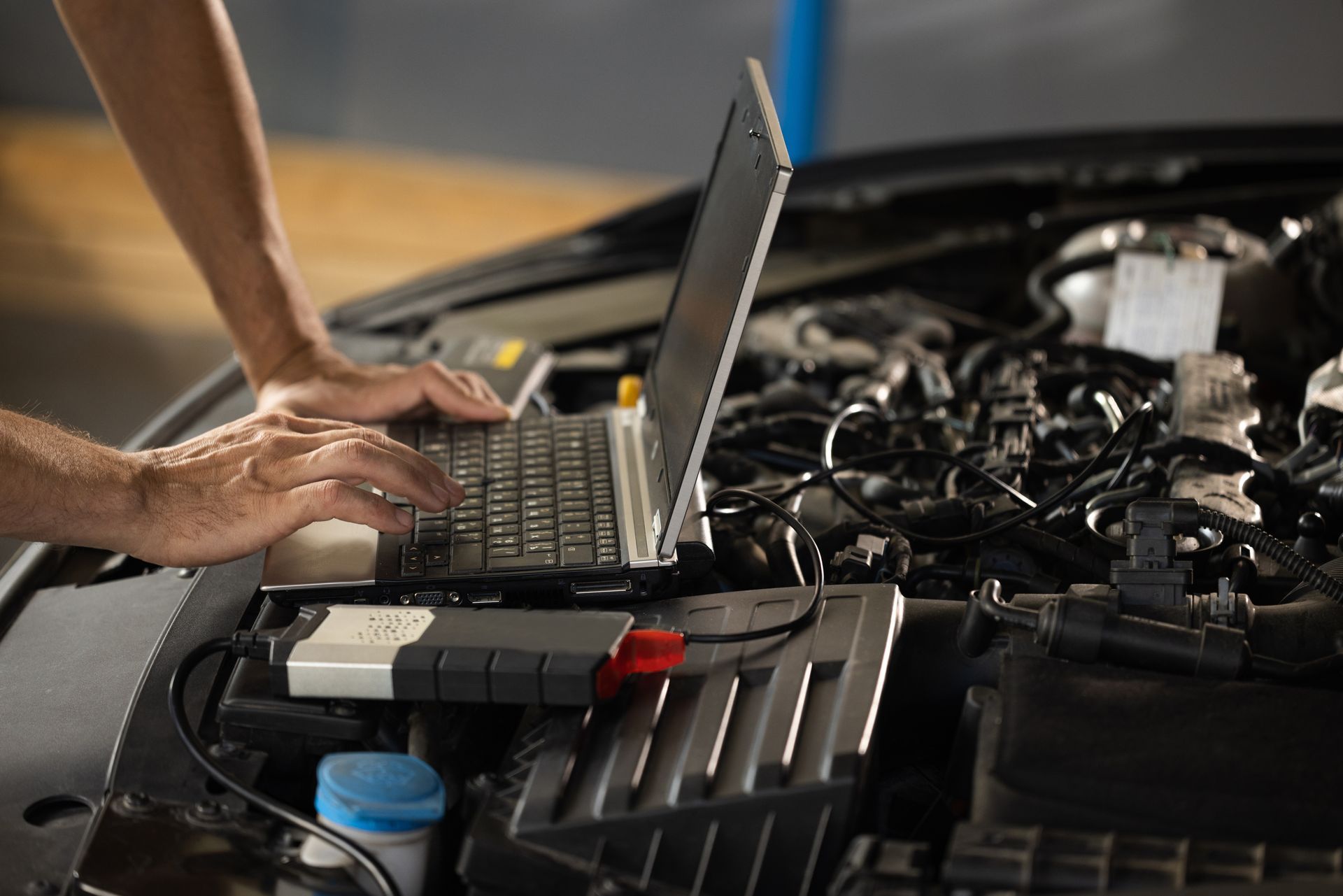
Once a vehicle has left you stranded, guessing usually costs more than testing. A proper diagnostic approach includes checking the battery state of charge, performing a load test, and measuring the voltage drop on the main cables while the starter is commanded. That shows whether the problem is in the battery, the cables, or the starter itself.
From there, a technician can test alternator output and look for parasitic drains that may be pulling the battery down while the car is parked. If the engine cranks but will not fire, fuel pressure tests, spark checks, and scan tool data help identify sensor, fuel pump, or ignition problems. The goal is to find the real cause so you do not replace a good battery when a starter, alternator, or wiring issue is actually to blame.
Get No-Start Diagnosis in New Port Richey, FL with Precision Tires & Auto
We can test your battery, starter, alternator, and wiring so you know exactly why your car will not start. We explain what needs to be repaired now and what you can do to prevent other issues down the road.
Call
Precision Tires & Auto in New Port Richey, FL, to schedule a starting and charging system check before a simple problem ruins your day twice.